
5 of the Oldest Restaurants in Mexico City
Some of the restaurants we’re showcasing today are still alive; others have disappeared for various reasons. What’s undeniable is that these establishments helped shape the city’s history and enriched its culture.
By Alejandro Pohlenz
At Food Police we've been feeling nostalgic. Sure, we love eating—obviously—but we're also fascinated by history. The list of the five oldest restaurants in Greater Tenochtitlan varies depending on the source. We apologize in advance if we leave some out (we probably will). Still, we dare say the list below comes very close to the truth. In this case, we’re even ranking the restaurants by age.
Hostería de Santo Domingo
This place was (or used to be) considered by many to be “the oldest restaurant in Mexico.” It began its persistent operation in 1860, before Emperor Maximilian of Habsburg arrived in our troubled country—when Benito Juárez was president and Mexico City (then simply known as “México”) had a staggering population of 250,000.
Hostería Santo Domingo welcomed writer Artemio de Valle Arizpe and musician Agustín Lara. And don’t doubt that after a couple of tequilas, José Alfredo Jiménez might have written one of his traditional melodies there.
It died in 2020, killed by the diabolical COVID-19.
Belisario Domínguez 72, Centro Histórico, Mexico City

Bar La Ópera
This iconic spot—still alive today and an essential part of Mexico City’s cultural identity—was founded 16 years after Hostería Santo Domingo, in 1876. The project was started by two French sisters named Boulangeot. It began as a pastry shop on the corner where the Torre Latinoamericana now stands: San Juan de Letrán and Avenida Juárez.
It’s said that both Zapata and Villa were regulars at Bar La Ópera. (Oh, how I would’ve loved to overhear their table talk!) Rumor has it that Villa fired his gun at the ceiling—no one knows if out of anger or something else—and the bullet hole is still there. Interestingly, La Ópera served as the headquarters for the coup-prone generals in Jorge Ibargüengoitia’s novel Los relámpagos de agosto.
Calle 5 de Mayo #10, Centro Histórico, Mexico City

Café de Tacuba
I don’t like using the word “emblematic,” because it has been used to death—same as “iconic.” Words worn thin lose their force.
So let’s say that Café de Tacuba is an institution tattooed into the history of Mexico City—a vital organ, a special chapter in the cultural book of Chilangolandia.
It was established during the Mexican Revolution, in 1912, by Don Dionisio Mollinedo from Villahermosa, Tabasco.
Sadly, tragedy gave Café de Tacuba added notoriety: in 1936 a political assassination took place there. Veracruz’s governor-elect, Manlio Fabio Altamirano, was killed with six shots.
Despite everything, the restaurant survived and today remains a beautiful landmark in the Historic Center.
Tacuba 28, Cuauhtémoc, Mexico City

El Taquito
Don Marcos Guillén and Grandma Conchita launched this business in 1917 (five years after Café de Tacuba).
What’s truly remarkable is that two global icons ate tacos here: Marilyn Monroe and John F. Kennedy.
And the parade of distinguished guests doesn’t stop: Gabriel García Márquez, Cantinflas, Jacobo Zabludovsky, and María Félix. Rumor has it that Diego Rivera proposed to María Félix right there (even though he was married to Frida Kahlo).
Ironically, despite all that fame and celebrity traffic, El Taquito had to close—not due to the pandemic, bad management, or legal issues. What wiped it off the map were street vendors.
Calle del Carmen 69, Centro, Mexico City

La Casa de los Azulejos
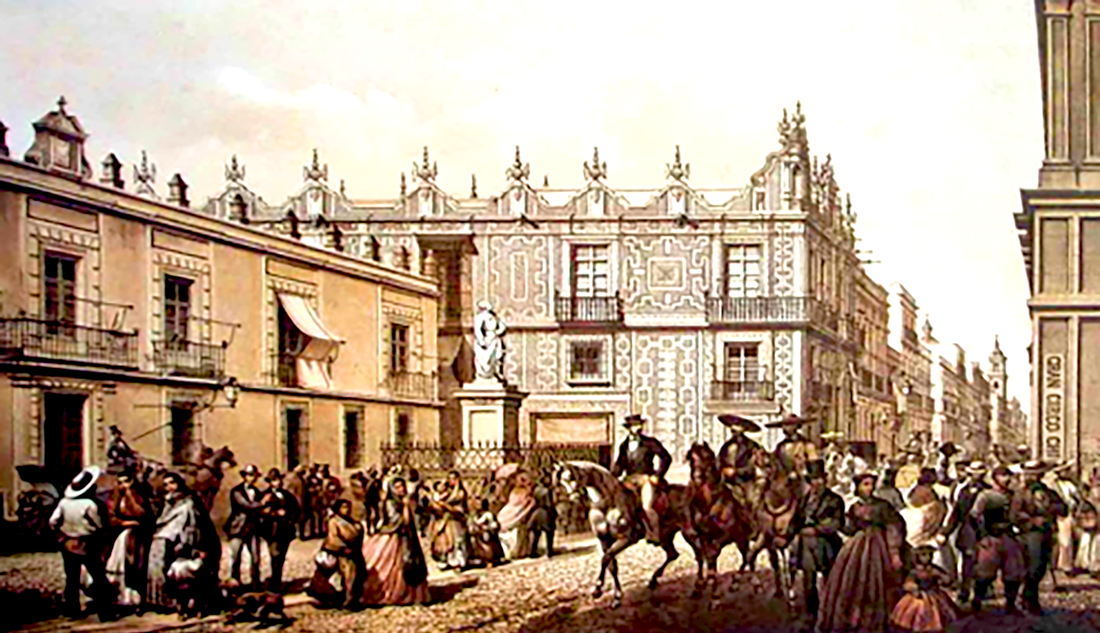
The history of the building that now houses the Sanborns de los Azulejos dates back to the Colonial era—it belonged to the Counts of the Valley of Orizaba (wow indeed).
The restaurant was set up there in 1919, created by Frank and Walter Sanborn, who had started their pharmacy business in 1903 under the name Sanborn American Pharmacy. The company was later purchased by a prominent Mexican billionaire of Lebanese descent.
La Casa de los Azulejos is an extraordinarily beautiful building and the restaurant—well, you know—is Sanborns, famous for its Swiss enchiladas and its… let’s say controversial coffee.
Av. Francisco I. Madero 4, Centro Histórico, Mexico City
